
Your shopping cart is empty!

Shopping Cart
0 item(s) - Rs 0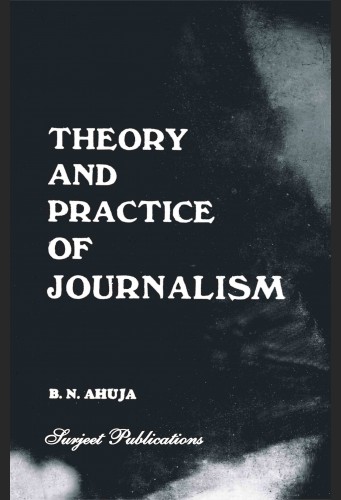
THEORY AND PRACTICE OF JOURNALISM

- Product Code: 978-81-229-0257-0
- Availability: In Stock
- Price: Rs 1,295
- Ex Tax: Rs 1,295
Quantity:
Journalism is a highly sophisticated and refined professions. To obtain a career as a journalist in a newspaper, periodical, advertising agency, broadcasting station, Government publicity organisation or in the film industry, the aspirant must possess basic grasp of the language and extensive vocabulary. He must also equip himself with all the technicalities of the profession if he wishes to make a mark and earn name and fame as a good writer and editor. The techniques of modern journalism with which this book is concerned have undergone a marvelous revolution in this century. Modern newspaper, radio wavelength, television satellites and multi-colour cinematography today play an all-pervading role of mass educators and mass entertainers. This book attempts to bring out how these are performing in different fields and in different countries. Part I aims at equiping the student with newspaper techniques and processes. It gives him comprehensive guidance regarding the ways and means to take up a career in newspaper. The student is informed about the day-to-day duties, functions and responsibilities of the journalist in different departments—editorial, reporting, sub-editing, proof-reading, advertising and publishing. Part II covers an exhaustive discussion of the ever-controversial question of the freedom of the press in all its ramifications—ethics, norms, codes, ideologies and national and international concepts. The viewpoints of prominent authorities on this subject have been appropriately brought out. This Part is useful not only for the student or the would-be-journalist but also for those who are already working in any of the media but wish to brush up their ideas with a view to safeguard their social and professional responsibilities and rise up the ladder to a senior position. Part III deals with more recent branches of journalism like Radio and Television. It describes how the future tools of journalism together with an accelerated revolution in communication technology could bring to fruition within a decade or two McLuhan’s concept of the global village which envisages access of international communication to each and every individual in the world. Such an ideal could alone pave the way for the growth of a wider international culture already in the process of making. Part IV gives an adequate background to the development of the press in India and major countries of the world—the U.K., U.S.A., France, West Germany, East Germany, Australia, Canada, China and the U.S.S.R. The book should prove useful for the students enrolled with journalism schools and colleges of any of the Universities in the country as well as for persons holding junior assignments in any of the media who wish to achieve greater initiative and drive in their profession.
Write a review
Your Name:
Your Review:
Note: HTML is not translated!
Rating: Bad Good
Enter the code in the box below: