
Your shopping cart is empty!

Shopping Cart
0 item(s) - Rs 0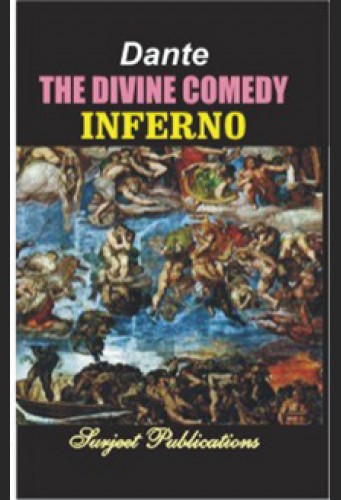
THE DIVINE COMEDY: INFERNO - PROSE TRANSLATION WITH AN INTRODUCTION BY G. R. HUNTER

- Product Code: 978-81-229-0435-2
- Availability: In Stock
- Price: Rs 160
- Ex Tax: Rs 160
Quantity:
The Divine Comedy is composed of three canticas — Inferno (Hell), Purgatorio (Purgatory), and Paradiso (Paradise) — composed each of 33 cantos. The very first canto serves as an introduction to the poem and is generally not considered to be part of the first cantica, bringing the total number of cantos to 100. The number 3 is prominent in the work, represented here by the length of each cantica. The verse scheme used, terza rima, is the hendecasyllable (line of eleven syllables), with the lines composing tercets according to the rhyme scheme. The poem begins on Good Friday of the year 1300, "In the middle of our life's journey" (Nel mezzo del cammin di nostra vita), and so opens in medias res. Dante is thirty-five years old, half of the biblically allotted age of 70 (Psalm 90:10), lost in a dark wood (perhaps, allegorically, contemplating suicide—as "wood" is figured in Canto XIII, and also the mention of suicide is made in Canto I of Purgatorio with "This man has not yet seen his last evening; But, through his madness, was so close to it, That there was hardly time to turn about" implying that when Virgil came to him he was on the verge of suicide or morally passing the point of no return), assailed by beasts (a lion, a leopard, and a she-wolf; allegorical depictions of temptations towards sin) he cannot evade, and unable to find the "straight way" (diritta via) to salvation (symbolized by the sun behind the mountain). Conscious that he is ruining himself, that he is falling into a "deep place" (basso loco) where the sun is silent ('l sol tace), Dante is at last rescued by Virgil after his love Beatrice intercedes on his behalf (Canto II), and he and Virgil begin their journey to the underworld. Dante passes through the gate of hell, on which is inscribed the famous phrase "Lasciate ogne speranza, voi ch'intrate", or "Abandon all hope, ye who enter here"[1] Before entering Hell completely, Dante and his guide see the Opportunists, souls of people who in life did nothing, neither for good nor evil (among these Dante recognizes either Pope Celestine V, or Pontius Pilate; the text is ambiguous). Mixed with them are the outcasts, who took no side in the Rebellion of Angels. These souls are neither in Hell nor out of it, but reside on the shores of the Acheron, their punishment to eternally pursue a banner, and be pursued by wasps and hornets that continually sting them while maggots and other such insects drink their blood and tears. This symbolizes the sting of their conscience and the repugnance of sin. “The Barque of Dante" by Eugène Delacroix Then Dante and Virgil reach the ferry that will take them across the river Acheron and to Hell proper. The ferry is piloted by Charon, who does not want to let Dante enter, for he is a living being. Virgil forces Charon to take them, but their passage across is undescribed since Dante faints and does not awake until he is on the other side.
Write a review
Your Name:
Your Review:
Note: HTML is not translated!
Rating: Bad Good
Enter the code in the box below: